Emotion Regulation
I’ve been thinking about emotion regulation, what that means, and how there’s this idea that we are supposed to be able to manage it alone — to self-regulate. I’m not saying there isn’t a place for box breathing and ice cubes, but I am saying it’s not always that simple.
Many clients I have feel an extra helping of failure because they are not managing, in their eyes, to self-regulate, to do it alone. Invariably, what they are managing to do is hold down impressive jobs, raise families and look after others, at the same time as attempting to squash the shame of not being able to keep themselves in the window of tolerance as a solo project.
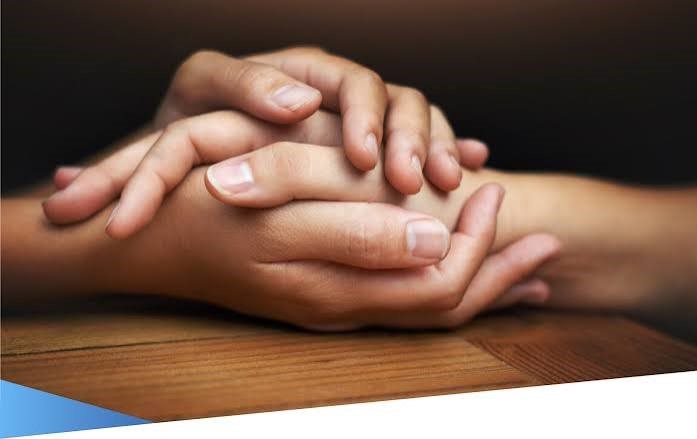
I’ve been thinking about the role of silence and touch; self-touch, the possibility of touch, touch for listening, physical touch, and the role of touch with an attuned other in regulating our bodies and finding peace.
I was lucky enough to spend three days at the end of June with Ed Novak — a leader in the TA field and winner of this year’s Eric Berne Memorial Award for his work on bringing physical contact into the psychotherapy room. Massive thanks to him and the wonderful colleagues on the workshop for the permission to go where the work has been leading me for some time…
With my clients, we’ve been really getting into the emotion of it — what it feels like to be dysregulated. That total pent-up ball of overwhelm, panic, disorientation and dissociation that spirals, swirls and grows inside you until your skin is full to bursting with it all. They can’t find a safe outlet — some dream of slicing it open with a knife, pulling out hair, burning skin, running to exhaustion — the pain often feels like the only door to let it out.
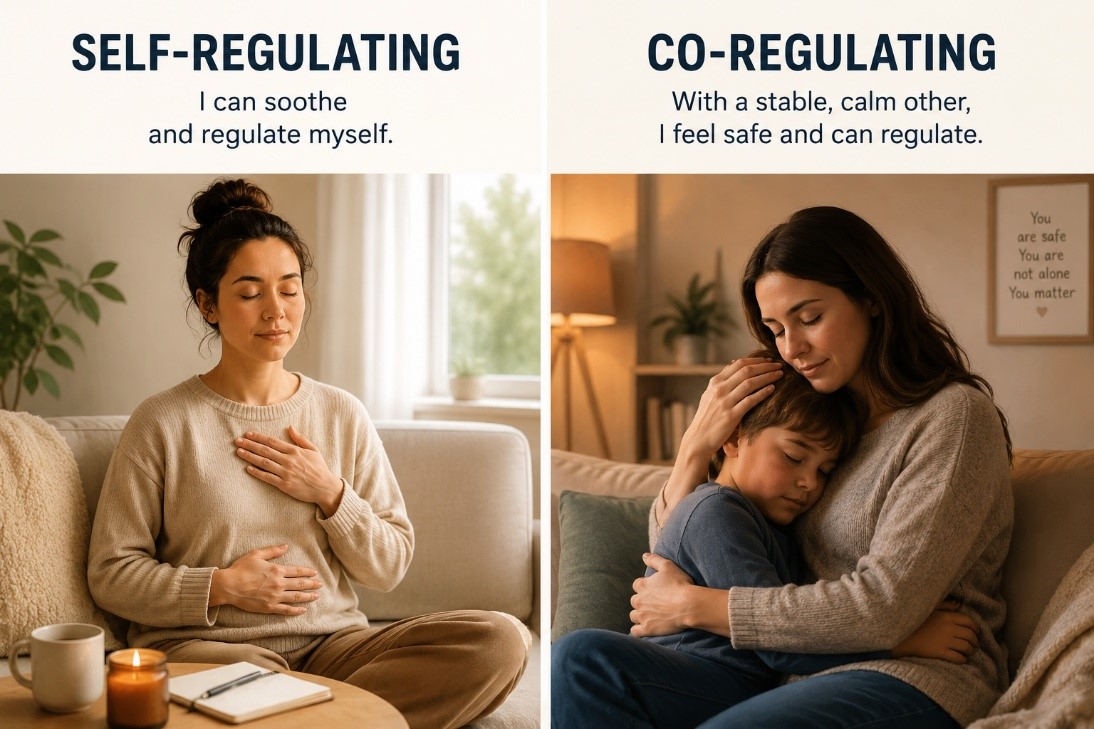
Which one do you need when things are too much?
So…
When you were a child, who kept you safe? I don’t mean who held your hand as you crossed the road, important though that is, but who, in those moments of all-consuming, uncontainable emotion; of monsters under the bed; of racing thoughts; of visions of being left alone — Mum’s hand slipping away from yours; of the desperate visceral need for that object, whatever it may be — who crouched down to your level? Who took your hands? Who breathed with you? Who looked you in the eye and said, with all the love and gentleness in the world:
“I am with you. I can see your pain. It’s terrible and it’s OK. I am with you.”
What would it feel like now to have that; to have that attuned other with you, to be together, maybe without words, breathing side by side, hearing and listening in the silence? The calming presence, a solid, gentle hand on your shoulder as you breathe in and out.
Maybe we don’t even need to do it — just sit and imagine what it would be like to have a different door to open and let the pain out.
You can learn more about how I work on the services page, or book a free introductory call.